
Neurofeedback Therapy Orange County: The Integrative Guide
Chronic anxiety that lasts through years of talk therapy often signals a hidden imbalance in your brainwaves. Dealing with these electrical patterns is often the key to lasting mental clarity.
Many people who feel stuck in a cycle of fatigue want to know how this technology works to help the brain heal. To see how this can help you, we must first look at What Is Neurofeedback Therapy? The path begins with
Neurofeedback Therapy Orange County: What Is Neurofeedback Therapy?
Neurofeedback is a drug-free way to help the brain learn how to work better. It is a type of biofeedback that shows you your brain waves in real time. By seeing this data, you can learn to self-regulate your brain function through simple feedback signals. This method does not use drugs or surgery. Instead, it uses a science-based loop to teach your brain new habits for health and focus.
A base of science and research
This path to wellness is not new. Research into this field spans 50 years. There are now more than 165,000 published studies that show how it can help with focus, sleep, and mood. Many people seek neurofeedback therapy orange county to find the root causes of brain fog or stress. This long history of data helps experts use the tool for many different health goals.
How the brain learns through feedback
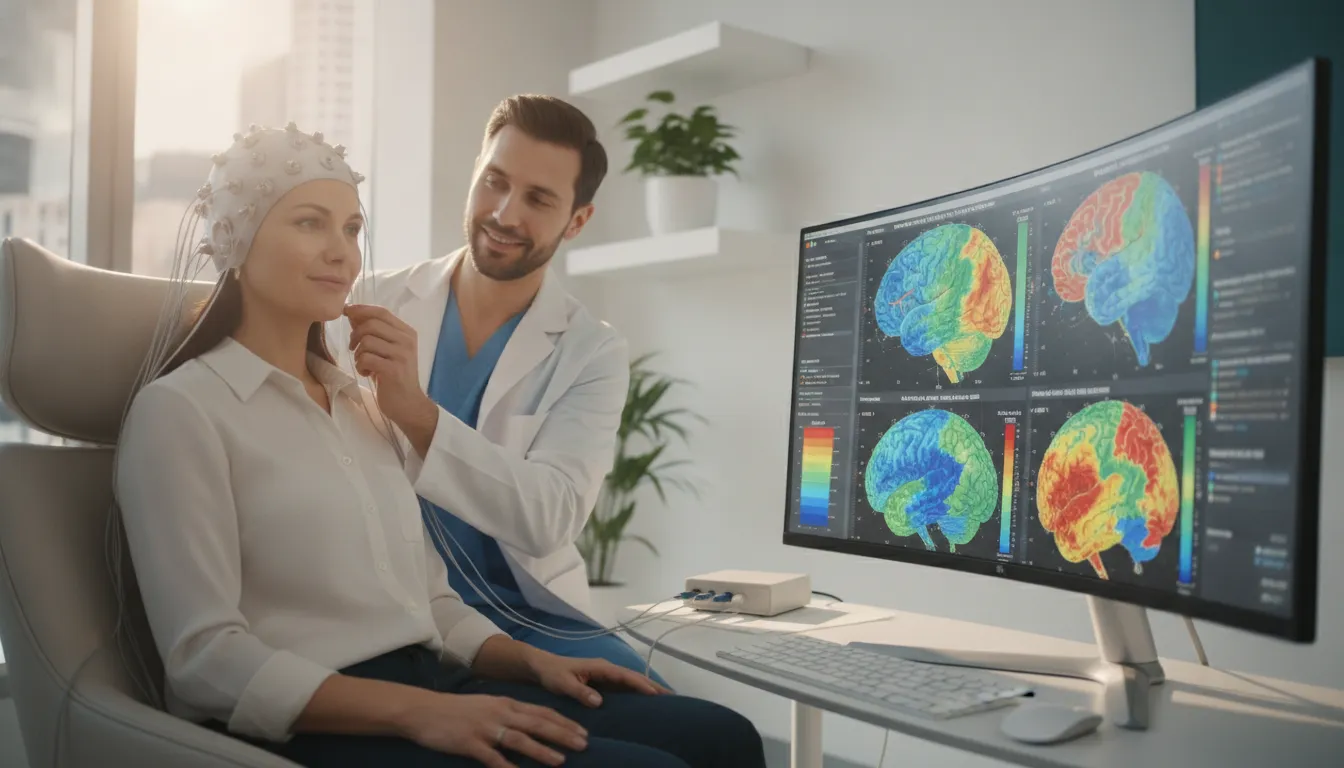
During a session, you wear a special headset with 19 sensors. This 19-channel system reads your brain waves while you watch a video or play a game. When your brain stays in a calm or focused state, the screen stays bright or the game moves forward. If your brain drifts, the feedback changes. This loop helps the brain find its own path to a balanced state.
The session experience
A typical session lasts about one hour. It is a quiet and restful process. You sit in a chair and let the screen give your brain the cues it needs to stay on track. Because it is non-invasive, most people find it easy to fit into a busy day. At Vaughan Vitality, we use a functional medicine approach to neurofeedback to help your whole body support your brain health.
How Is Neurofeedback Different from Conventional Mental Health Care?
Most mental health care focuses on managing signs of distress. Conventional doctors often use drugs to change brain chemistry. While this can help in the short term, it does not always solve the root cause. At Vaughan Vitality, we look for why brain issues start. We use QEEG brain mapping services to see how your brain works before we start any care.
Chemical Changes vs. Brain Retraining
Common care uses drugs like SSRIs or other pills. These tools change how your brain sends signals by adding or blocking chemicals. This can lead to side effects or a need for long term use. In contrast, neurofeedback therapy teaches your brain to control its own state. It is a form of biofeedback that shows you your brain waves in real time. This helps you learn to shift your brain into a better state without relying only on drugs.
A Full Root Cause Approach
Many centers offer one type of care. Some only do talk therapy, while others only do brain training. We are the only practice in Orange County that combines QEEG brain mapping with neurofeedback and our functional medicine services. This means we look at your brain waves, but we also check your gut health, toxic load, and nutrition. We want to find why your brain is struggling, not just treat the signs.
| Feature | Conventional Care | Neurofeedback |
|---|---|---|
| Main Goal | Manage symptoms with chemicals | Train brain for self-regulation |
| Side Effects | Common (weight gain, fatigue, brain fog) | Rare and usually very mild |
| Treatment Length | Often years or for life | Set plan (often 20 to 40 sessions) |
| Cost Focus | Ongoing drug costs and copays | Upfront cost for long term change |
| Type of Doctor | Psychiatrist or General MD | BCN Certified Specialist |
By training the brain itself, patients often see lasting results. Conventional care is a way to use chemicals to help signs. Neurofeedback is a way to help the brain learn new habits. Both have their place, but many people in Orange County find that retraining the brain leads to more freedom and fewer side effects over time.
The QEEG Brain Mapping Process
QEEG stands for quantitative electroencephalography. It is a tool that measures electrical activity in your brain. This data helps us find brainwave patterns linked to your symptoms. By using QEEG brain mapping services, we can create a plan to help your brain work better. This process is the first step in neurofeedback therapy for our Orange County patients.
How brain mapping works
A brain map shows how your brain cells talk to each other. We look for brainwaves that are too fast or too slow. These imbalances often lead to issues like brain fog or sleep trouble. Unlike some clinics that guess based on symptoms, we use hard data. Our practice uses 19-sensor dry electrode technology. This means you do not need messy gels or pastes in your hair during the test.
- Headset placement. We place a 19-sensor headset on your head. These sensors follow a standard system to track the frontal, temporal, central, and occipital lobes. This setup records brain activity from all major areas at once.
- Data recording. You will sit in a comfortable chair while the sensors record your brainwaves. We may ask you to rest with your eyes closed or look at a screen. A typical session lasts about one hour to ensure we get a full view of your brain function.
- Visual report. The software turns the raw data into a visual map. This report uses colors to show where brainwaves are out of range. It helps us find parts of the brain that may be stuck in a state of high stress or low energy.
- Clinical review. Dr. Vaughan reviews the map to find the root cause of your symptoms. We look for patterns linked to past head injuries or toxic stress. This step is vital to see why you feel the way you do.
- Protocol design. We use your map to build a custom neurofeedback plan. Your plan might focus on alpha, beta, or theta waves based on your specific needs. This personalized approach helps you get the best results from your care.
Why mapping matters
Many clinics skip this step and start training right away. We believe that is like a doctor giving a drug without a blood test. Brain mapping removes the guesswork. It shows exactly which areas need support. This data-driven start is why many choose neurofeedback therapy in Orange County as a path to better health.
What Conditions Can Neurofeedback Help With?
Neurofeedback therapy helps people who have not found relief through standard care. It is a form of biofeedback that teaches the brain to self-regulate. By measuring brain waves and giving real-time signals, this method helps the brain learn more stable patterns. It is used as a complementary and alternative treatment for many issues. This drug-free approach addresses the root cause of symptoms rather than just masking them.
Support for Focus and Mood
Many patients seek neurofeedback to help with focus and emotional health. It is often used for ADHD and ADD to help the brain stay in a calm, alert state. People with anxiety and depression may also find it helpful for mood stability. Dr. Kristi Vaughan uses QEEG brain mapping services to see which brain waves are out of balance. This data helps create a custom plan for each person.
The practice also helps people with PTSD and sleep issues like insomnia. By calming the nervous system, neurofeedback helps the brain shift into deep rest more easily. It is a safe way to build long-term brain health without the side effects of drugs. Dr. Vaughan is Board Certified in Neurofeedback (BCN), which gives her the expertise to handle complex cases.
Cognitive Health and Developmental Support
Neurofeedback is a powerful tool for brain fog and low mental energy. It helps people regain clarity after head injuries or long-term stress. Research shows that brain retraining can help with concussions and traumatic brain injury. It also supports people on the autism spectrum and those with learning disabilities. Each map finds the unique brainwave patterns involved in these conditions.
This method can also address physical brain issues like migraines and chronic pain. Some studies suggest it may help with epilepsy and OCD by calming overactive brain areas. By using a functional medicine approach to neurofeedback, Dr. Vaughan looks at the whole body. She combines brain data with lab tests to find out if gut health or toxins are affecting the brain.
The Role of Board-Certified Expertise
Choosing the right provider is key to seeing real change in your health. Dr. Kristi Vaughan is one of the few in Orange County who is Board Certified in Neurofeedback. Her deep training ensures that every session is based on science and clinical data. She uses 19-sensor maps to get a full view of how your brain functions. This high level of care sets her apart from basic symptom-based clinics.
Why Vaughan Vitality Is Different: The Functional Medicine Connection
Many clinics offer brain training, but Vaughan Vitality & Wellness stands out in Southern California. It is the only practice for neurofeedback therapy orange county that blends QEEG mapping with full functional medicine and neurology. Most doctors just look at symptoms like brain fog or low energy. We look at your whole body. This means we check how your gut, hormones, and brain work together to help you feel your best.
Our approach is unique because we do not treat the brain in a vacuum. We know that issues in the gut or high levels of toxins can affect how your brain works. By fixing these root causes, we make neurofeedback work better. You are not just a set of symptoms to us; you are a partner in your own health journey.
The Vaughan Vitality Roadmap
We use a clear three-phase plan called the Vaughan Vitality Roadmap to help you heal. This system guides your care from your first visit to your final goal. It ensures that no part of your health is left to chance.
- Phase 1: Review and Identify - We start with 19-sensor QEEG mapping to see how your brain waves move. We also run advanced lab tests to find the hidden causes of your health issues.
- Phase 2: Remove and Repair - We work to fix your gut health and lower body-wide inflammation. We also help your body clear out toxins like mold or heavy metals that can slow you down.
- Phase 3: Rebalance and Replenish - Once your body is clean and strong, we use neurofeedback to train your brain. We also give you the exact nutrients your body needs to stay healthy for the long term.
A Team of Top Experts
Your health is managed by a group of highly trained experts who work together for you. Dr. Kristi Vaughan leads our team in Costa Mesa. She holds many top titles, including DC, BCN, and IFMCP. She is one of the few doctors in the area who is board certified in neurofeedback. Her deep knowledge of both the brain and the body allows her to see links that other doctors might miss.
Dr. Pierce also plays a key role in our practice. He is an expert in chiropractic neurology and holds the DACNB title. Together, they bridge the gap between brain science and functional medicine. This team approach is why so many people in Orange County trust us with their care.
Testing That Goes Deeper
We do not guess when it comes to your health. We use science to find real answers. Our team looks at stool tests for gut health and checks your hormone levels. We also test for food sensitivities and toxicities like mold. These tests show us why your brain might be struggling or why you feel tired all the time.
Research shows that neurofeedback is a safe, drug-free way to help the brain self-regulate. Studies on neurofeedback as another way to help the brain show it can help with many brain issues. By fixing your body and training your brain at the same time, you get results that last. This whole-body focus is what makes us different from a standard neurofeedback clinic.
You can start your journey with a New Patient Visit for just $250 at our Costa Mesa office. Our full health programs range from $399 to $599 per month depending on your needs. If you are ready for a new approach to health, Schedule a Free Health Assessment today. We are here to help you find the answers you need.
What to Expect from Neurofeedback Therapy in Orange County
Starting a new health plan can feel like a big step. At Vaughan Vitality, we keep the process clear and simple for our Orange County patients. Most people start with a new patient visit to talk about health goals and medical history. This visit costs $250 and helps us find the best path for your needs. We also offer telemedicine for people in California and Georgia who need remote lab reviews or follow-up care.
Your Brain Training Sessions
A typical neurofeedback visit lasts about one hour from start to finish. According to UC Irvine Health, you will likely wear a headset while you watch a video or play a computer game. The headset uses 19 sensors to gather brain wave data in real time. This process is safe and drug-free. It helps your brain learn to manage itself through simple feedback signals. Many patients find the training feels like a mental workout that builds neuroplasticity and brain resilience over time.
Timeline and Schedule
Most patients come in for training once or twice per week. Every brain is unique, but a full plan often includes 20 to 40 sessions to see lasting changes. Some people report feeling a change in focus or mood after just 4 to 6 visits. Big and stable results usually take two to three months of regular training. We offer program packages from $399 to $599 to make this long-term care easy for our local community to get.
The Road to Better Health
Neurofeedback works best when we find the root causes of brain issues. This is why we combine brain training with functional medicine in our three-step roadmap. During your visits, you can expect a calm place where you sit back and let the tech do the work. After each session, we check in to see how you feel and track your growth. If you are ready to start, you can schedule a free health assessment to meet our team.
Frequently Asked Questions
Does neurofeedback therapy actually work?
Research over the last fifty years shows that brain training can help many health issues. More than 165,000 studies show its use for things like ADHD, sleep loss, and stress. As seen at Neurofeedback OC, this science-based path helps people build focus and mental strength. By teaching the brain to control its own patterns, patients can find long-term relief from chronic symptoms without the need for pills or drugs.
Can neurofeedback help with OCD?
Yes, studies show that neurofeedback is a helpful tool for those with OCD. It works by finding brain wave patterns that cause stuck thoughts and training the brain to shift into a calm state. Research found on PubMed lists it as a top choice for brain health issues that do not respond well to standard care. This drug-free path helps the brain learn to self-regulate. This can lead to a more balanced life.
Can you do neurofeedback if you have epilepsy?
Neurofeedback has been used for many years as a safe, drug-free way to help those with epilepsy. Based on a study on PubMed, it is a known choice for many brain health issues, including seizures. The process helps the brain retrain itself to stay in a steady state. This can help lower the number of events for some people. Always talk with a board-certified expert to see if this path fits your own needs and health past.
How long is a typical neurofeedback appointment?
A typical visit for brain training in Orange County takes about one hour. This includes time to set up the sensors, run the session, and look at the data. As the UCI Susan Samueli Institute notes, patients watch a video or play a game while the system reads their brain waves. Most people find the process easy and restful. Regular visits over several weeks are usually needed to help the brain learn new, healthy habits that last.
How much does a session of neurofeedback cost?
The cost of care varies based on the type of plan you need. At our practice, a new patient visit is $250 as a special offer. Health programs that combine brain mapping and training often range from $399 to $599. These plans are built to find the root cause of your health issues and give you a clear path to healing. Since every brain is unique, we create custom plans to make sure you get the best help for your goals and budget.
Ready to retrain your brain for better health?
Waiting to address brain fog or chronic stress often allows these patterns to deepen. Starting your path to brain health today helps you stop the cycle of mental fatigue and gain back your focus. You can find the root cause of your symptoms and support your goals with a clear, data-driven plan. Our team in Costa Mesa uses advanced tools to help you reach a state of calm and mental clarity. By taking action now, you can move toward the life you want with a strong and resilient brain. We look forward to helping you build a roadmap for long-term health and wellness. Every day you wait is another day spent dealing with symptoms that hold you back from your full potential. Your health is your most valuable asset, and it is time to give it the care it needs.
Ready to get started? Schedule your free health assessment to talk to a functional medicine expert.

qEEG Brain Scans: Unlocking the Root Cause of Brain Issues, Memory, Anxiety, and More
In the world of functional medicine, we believe that true healing begins with accurate information. When it comes to the brain—the master regulator of our health, mood, and cognitive function—standard assessments often fall short. They treat symptoms like depression, anxiety, or insomnia in isolation. At Vaughan Vitality and Wellness, we use Quantitative Electroencephalography (qEEG) Brain Mapping as a powerful, non-invasive tool to look beneath the surface and diagnose the functional root cause of a wide range of neurological and psychological issues.
What is qEEG Brain Mapping? The Functional Difference
How qEEG Helps Diagnose a Wide Spectrum of Brain Issues
QEEG is a breakthrough tool for diagnosing a wide range of cognitive and emotional issues. For a condition like anxiety or depression, qEEG can reveal a pattern of excessive fast-wave activity (such as High Beta) associated with constant worry and panic. It can also identify an area with excessive slow-wave activity (Alpha or Theta), often linked to depression, low motivation, and cognitive decline.
For a memory issue or cognitive dysfunction, qEEG can highlight slow-wave activity in the region responsible for executive function and working memory, such as the frontal and temporal lobes. This insight enables functional medicine practitioners to design a personalized treatment plan targeting the specific brain region that requires improvement.
In cases of a traumatic brain injury (TBI) or concussion, qEEG can identify persistent abnormality in the brain’s electrical patterns, often present long after the initial injury. For those with a sleep disturbance or migraine, qEEG helps to detect an imbalance that disrupts normal sleep cycles or contributes to a migraine pattern, providing valuable information for targeted treatment.
The Critical Link: qEEG to Neurofeedback Treatment
Personalized Brain Health: The Functional Medicine Advantage
A New Era of Brain Health: The Role of Neurofeedback in Cognitive Wellness
Neurofeedback is revolutionizing the way we approach brain health. Unlike traditional treatments, which often rely on medication to manage a symptom, Neurofeedback empowers the brain to heal itself. This method teaches the brain to produce more balanced and regulated brainwave patterns, leading to improved mental clarity, emotional regulation, and overall cognitive function.
A patient who undergoes Neurofeedback often reports a variety of benefits, including reduced anxiety, improved sleep, better memory, and enhanced mood. The key advantage of Neurofeedback is that it offers a non-invasive, medication-free alternative to addressing a mental health concern. It empowers the patient by giving them control over their brain’s function and provides lasting relief from many chronic issues.
