

When symptoms continue after a concussion, uncertainty can become its own burden. Headache, dizziness, fatigue, vision changes, slowed thinking, sleep disruption, or emotional changes may affect work, family responsibilities, and confidence in daily activities. A clear record of what is happening can make a clinical conversation more useful, while new or worsening warning signs should never be managed by tracking alone.
Schedule a free health assessment
Post concussion syndrome describes a pattern of symptoms that persist or change after a concussion; it is not a substitute for an individualized evaluation. Symptoms differ from person to person and may affect how you feel, think, act, or sleep. Some appear immediately, while others may develop hours or days later, according to the CDC.
The safest next step is to separate routine symptom observation from urgent concerns, then bring practical details about timing, triggers, and daily function to a qualified clinician. Understanding the pattern begins with what this term can, and cannot, explain.
By Dr. Kristi Vaughan, DC, BCN, IFMCP, BSBA.
What is post concussion syndrome?
Post concussion syndrome is a term used to describe a pattern of symptoms that may continue after a concussion or mild traumatic brain injury. It is not a stand-alone explanation for every symptom, and it should not be treated as a diagnosis made from one symptom or one test. The pattern can include physical, cognitive, behavioral, and emotional changes, with symptoms and duration varying from person to person. Clinical reference information describes postconcussive syndrome as a constellation of symptoms commonly associated with mild TBI.
Timing can make the picture difficult to interpret. Some concussion symptoms appear immediately, while others may not become noticeable for hours or days. The Centers for Disease Control and Prevention also notes that symptoms may change during recovery. A person may therefore feel relatively well at one point and struggle later, especially after increased activity, poor sleep, or a demanding day. This fluctuation does not prove that a new injury has occurred, but it is worth documenting and discussing with a healthcare provider. The CDC symptom guidance provides additional safety information.
Persistent symptoms can overlap with other health problems or with factors that were present before the injury. For that reason, a careful clinical history should consider the timing of the injury, previous symptoms, medications, sleep, stress, and changes in daily function. Describing a symptom pattern is a useful starting point, not a substitute for evaluation. If symptoms are worsening, severe, or accompanied by urgent warning signs, seek prompt medical care rather than waiting for routine follow-up.
What symptoms can post concussion syndrome involve?
Persistent symptoms can look different from one person to another, and they may affect more than one part of daily life. The CDC notes that concussion symptoms may influence how you feel, think, act, or sleep. They can also appear later and change during recovery, so a symptom pattern is not a substitute for a clinical evaluation.
| Symptom group. | Examples. | Possible daily-function context. |
|---|---|---|
| Physical and sensory. | Headache, dizziness, balance problems, fatigue, vision problems, or sensitivity to light and noise. | Difficulty driving, exercising, moving through busy environments, reading, or completing a full workday. |
| Cognitive. | Slower thinking, brain fog, trouble with attention or concentration, or memory difficulties. | Forgetting steps, losing a train of thought, taking longer to make decisions, or needing more breaks. |
| Emotional and behavioral. | Anxiety, nervousness, irritability, or feeling more emotionally reactive than usual. | Strain in conversations, reduced tolerance for stress, or difficulty managing familiar responsibilities. |
| Sleep-related. | Trouble falling asleep, sleeping less than usual, or sleeping more than usual. | Unrefreshing rest, daytime fatigue, changes in routine, or reduced capacity for work and family activities. |
These categories can overlap. For example, poor sleep may intensify fatigue or concentration concerns, while dizziness or light sensitivity may make ordinary environments harder to tolerate. That overlap does not establish a diagnosis by itself. It is useful to note when symptoms occur, what seems to worsen them, and which activities are affected. Share that record with a qualified healthcare professional rather than trying to interpret one symptom in isolation. The CDC provides an overview of concussion signs and symptoms for additional context.
Can post concussion syndrome symptoms come and go?
Yes. Symptoms associated with post concussion syndrome may fluctuate rather than follow a smooth, predictable line. Some symptoms appear immediately after an injury, while others may not become noticeable for hours or days. The Centers for Disease Control and Prevention also notes that symptoms can change during recovery, so a better day does not necessarily mean every underlying concern has resolved.
Patterns can vary from person to person. Headache, dizziness, light or noise sensitivity, fatigue, concentration difficulty, sleep changes, and emotional symptoms may become more noticeable after mental effort, physical activity, poor sleep, or a demanding day. At other times, a person may feel relatively well and then experience symptoms again. This variability can be frustrating, but it does not by itself confirm a diagnosis or explain why symptoms are occurring. The CDC describes concussion symptoms as different for each person and notes that they can affect how someone feels, thinks, acts, or sleeps. Read the CDC overview of concussion symptoms.
Duration is also uncertain. A clinical review describes postconcussion symptoms as having varying durations, while a systematic review cautions that persistent symptoms can reflect a combination of post-traumatic and other contributing factors. That is one reason a symptom log can be useful without becoming a self-diagnosis. Record the date, time, symptom type, severity, sleep, activity, screen or sensory exposure, and effect on work, driving, exercise, or daily tasks. Bring those observations to a qualified clinician. A clear record can show patterns that are easy to overlook and support a more focused conversation about evaluation and next steps.
How is post concussion syndrome evaluated?
Evaluation begins with the story of the injury and what changed afterward. A clinician may ask when the injury occurred, whether there was a loss of consciousness, which symptoms appeared first, and how those symptoms have changed. Because symptoms can emerge later and fluctuate, a clear timeline can be more useful than relying on a single snapshot during an appointment.
History, symptoms, and daily function
Your clinician may review headaches, dizziness, vision changes, sleep, energy, mood, memory, attention, and sensitivity to light or noise. The conversation should also include practical function: Are you able to work, drive, read, exercise, manage conversations, and complete household tasks as usual? Changes in these areas can help distinguish what is most disruptive and guide appropriate next steps.
Bring a short record of symptom timing, severity, triggers, sleep, activity, medications, and questions. Include relevant medical history and prior test results. This does not establish a diagnosis, but it gives the clinical team a more complete context for deciding what needs attention.
Examination and testing when appropriate
A physical and neurologic examination may be part of the evaluation. Depending on the symptoms and history, a clinician may consider cognitive or neuropsychological testing to examine areas such as learning, memory, concentration, and problem solving. These tests can help identify effects associated with a mild traumatic brain injury, but they are only one part of a broader assessment.
One normal test does not automatically explain or rule out every concern. The CDC notes that a mild traumatic brain injury may not appear on some tests. Brain imaging is also not required to identify every concussion. A CT scan may be considered when there is concern about bleeding or another urgent problem, so imaging decisions should be based on the clinical situation rather than a routine expectation.
When referral may be appropriate
Persistent or complex symptoms may call for coordination among clinicians with relevant experience. Ask who should oversee the evaluation and whether referral to a neurologist, neuropsychologist, vestibular or vision specialist, or another professional is appropriate. If symptoms are worsening or include emergency warning signs, do not wait for a routine appointment. Seek urgent evaluation instead. For background, the CDC overview of mild traumatic brain injury evaluation explains why clinical context matters.
Which post concussion syndrome symptoms need urgent care?
Persistent symptoms deserve appropriate follow-up, but some changes after a head injury require emergency medical attention rather than a routine appointment. Do not wait for a post concussion syndrome article, QEEG appointment, or health assessment if symptoms are severe, rapidly worsening, or match the warning signs below. The Centers for Disease Control and Prevention recommends urgent evaluation for these danger signs after a concussion or mild traumatic brain injury.
- A headache that is getting worse and does not go away.
- Repeated vomiting.
- New weakness, numbness, loss of coordination, convulsions, or a seizure.
- Slurred speech, unusual behavior, increasing agitation, or marked confusion.
- Inability to recognize people or places.
- Loss of consciousness, extreme drowsiness, or difficulty waking the person.
These symptoms can signal a serious complication that needs prompt assessment. Seek emergency care immediately, and use local emergency services when appropriate. If you are with someone who has had a head injury and they become difficult to wake, confused, or neurologically impaired, do not drive them to a scheduled integrative visit or wait to see whether the symptoms pass.
Even without an emergency warning sign, people with a suspected concussion should be seen by a healthcare provider. Symptoms may appear immediately or develop hours or days after the injury, and they can overlap with other health problems. Once urgent concerns have been addressed, a clinician can help determine the appropriate next step for ongoing symptoms and daily-function changes. Source: CDC concussion signs and symptoms.
What should you track before a clinical conversation?
A clear record can help turn a frustrating pattern into useful information for your healthcare provider. It does not need to be perfect, and self-tracking does not replace an evaluation. Focus on what changed after the injury, what varies from day to day, and what now requires more effort.
- Write down the injury timeline. Note the date and setting of the injury, what happened immediately afterward, whether you lost consciousness, and when each symptom first appeared. Include any earlier head injuries or relevant medical history. Symptoms may appear hours or days after a concussion, so a delayed pattern is still worth recording. Bring discharge papers, medication lists, and prior test results if you have them.
- Describe each symptom precisely. For headaches, note location, quality, duration, and severity on a simple 0-to-10 scale. For dizziness, vision changes, concentration problems, fatigue, irritability, or light and noise sensitivity, record what the experience feels like and how long it lasts. Mark whether symptoms are constant, intermittent, improving, or worsening. This is more useful than writing only “I feel off.”
- Track sleep and activity together. Record bedtime, awakenings, total sleep, and whether you slept more or less than usual. Add what you did during the day, such as screen time, reading, driving, work, exercise, or errands. Note whether an activity brought on symptoms or left you more fatigued later. Ask, “How should I return to activities safely?” rather than testing your limits alone.
- Look for possible triggers without assuming a cause. Note changes in lighting, noise, busy environments, stress, meals, hydration, or exertion when they occur near a symptom increase. A pattern can guide questions, but it is not proof that one trigger explains the entire problem.
- Measure the effect on daily life. Record what has changed at work, while driving, reading, exercising, maintaining relationships, or completing household tasks. Ask, “What is safe for me right now?” and “Which symptoms should prompt follow-up or referral?” A functional medicine evaluation may include medical history, prior labs, baseline measurements, and follow-up symptom tracking.
- Bring the record to a collaborative conversation. Persistent symptoms can have more than one contributing factor, so ask how the clinician will evaluate the whole pattern and coordinate care when appropriate. Vaughan Vitality describes its three-phase Vaughan Vitality Roadmap as a broad practice framework: Review and Identify, Remove and Repair, and Rebalance and Replenish. It is not a concussion treatment protocol or a substitute for urgent care.
What are measured next steps for post concussion syndrome?
Persistent symptoms deserve a careful clinical conversation, especially when they affect work, relationships, exercise, driving, or sleep. A clinician can review when the injury occurred, how symptoms have changed, and what is difficult in daily life. Bring relevant medical records, imaging or testing reports, medication and supplement lists, sleep details, and a short list of questions. This context helps the clinician decide whether additional assessment, symptom-specific support, or referral to another qualified professional is appropriate.
A useful appointment is not a search for one test to explain everything. Post-concussion symptoms can overlap with other concerns, so the next step may involve coordinating care across more than one discipline. Ask what each assessment is intended to clarify, how results would affect the plan, and which changes should prompt follow-up. A symptom log can support the discussion, but it does not establish a diagnosis or replace evaluation.
For local patients, Vaughan Vitality offers functional medicine evaluation in Costa Mesa. The practice describes a broader process that can include reviewing medical history and prior labs, establishing baseline measurements, and tracking symptoms over time. You can also learn more about the Vaughan Vitality Roadmap and how an individualized care conversation is structured.
If a qualified clinician recommends a test-specific discussion, the QEEG brain mapping guide explains that resource at a high level. It does not replace an examination, diagnose post concussion syndrome by itself, or determine treatment on its own.
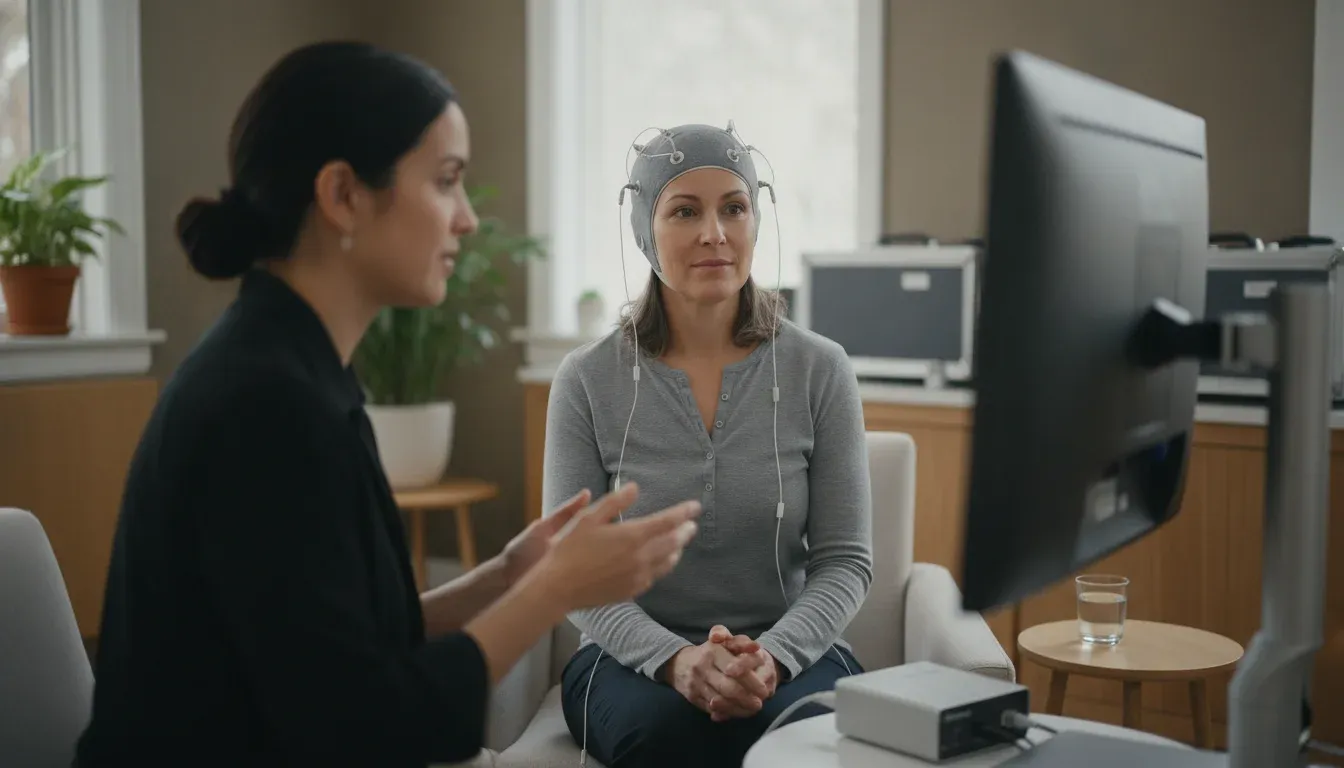
Telemedicine may be an access option for patients in California and Georgia through telemedicine in California and Georgia. It is not a substitute for emergency care, an in-person neurological examination when one is needed, or urgent evaluation after a worsening symptom. Seek urgent or emergency care for red-flag symptoms such as a worsening headache that does not go away, repeated vomiting, new weakness or numbness, seizures, slurred speech, severe confusion, loss of consciousness, or inability to wake.
Schedule a free health assessment
Frequently Asked Questions
Can concussion symptoms come and go?
Yes. Symptoms may appear right away or develop hours or days after the injury, and they can change during recovery. Keep a simple record of symptom timing, severity, sleep, activity, possible triggers, and effects on work or daily tasks so a clinician can see the pattern. Symptoms that fluctuate still deserve professional evaluation.
How is post concussion syndrome assessed or tested?
Assessment usually begins with the injury history, current symptoms, and changes in daily function. A healthcare provider may ask about learning, memory, concentration, and problem solving, and may use neurocognitive testing when appropriate. A normal test does not automatically rule out a mild traumatic brain injury or concussion, and CT imaging is not required to identify every mild injury. The CDC explains concussion evaluation and testing.
What symptoms after a concussion require urgent medical attention?
Seek urgent evaluation for a worsening headache that does not go away, repeated vomiting, weakness or numbness. Decreased coordination, seizures, slurred speech, unusual behavior, increasing confusion, unequal pupils, loss of consciousness, or an inability to wake someone. Do not rely on a symptom log or a scheduled appointment when an emergency warning sign is present. Review the CDC emergency danger signs.
What should I track before a clinical conversation?
Record when symptoms occur, how severe they feel, what activity preceded them, sleep quality. Sensory triggers, medications or supplements, and whether they affect driving, work, exercise, communication, or self-care. Bring the log, injury timeline, medical history, prior test results, and questions about safe activity progression. Tracking supports a clinical conversation; it does not replace care.
Can persistent symptoms have more than one contributing factor?
Yes. Persistent post concussion symptoms are a group of nonspecific physical, cognitive, behavioral, and emotional symptoms, rather than one single disease process. Because symptoms can overlap with other health concerns, a detailed clinical assessment may help identify factors that need attention. This is one reason collaborative care and appropriate referral can be useful.
Schedule a Thoughtful Next Step
Persistent symptoms after a concussion can be difficult to make sense of, especially when they affect daily function. A conversation can help you organize your concerns, review relevant history, and discuss appropriate next steps without assuming one test explains everything. Dr. Kristi Vaughan, DC, BCN, IFMCP, BSBA, takes a patient-centered approach to understanding the broader picture.