
Mold toxicity symptoms occur when your body cannot clear mycotoxins from indoor mold, leading to chronic health issues that go undetected by most conventional doctors. According to Parsley Health, these signs include breathing issues like coughing and brain fog, though some people experience joint pain or extreme fatigue. Because these signs mimic other chronic conditions, many people struggle for years without a diagnosis while toxins continue to trigger systemic inflammation and damage your cells. At Vaughan Vitality, we use functional medicine to find the root cause and support your detox pathways with custom care for your recovery.
Schedule Your Free Health Assessment Today — uncover the hidden cause of your chronic symptoms with advanced testing and expert guidance.
Severe fatigue that survives ten hours of sleep is not normal aging. It often signals a deeper issue with your environment. Finding these hidden triggers is the first step toward lasting health. While constant fatigue is common, the impact of toxins on your brain is often the hardest part of mold illness. You can learn more about these risks on our CIRS and Environmental Toxicity page. The journey starts with recognizing the signs and seeking care that addresses the root cause.
Mold Toxicity Symptoms: Cognitive Effects Like Brain Fog and Memory Loss
Mold toxins called mycotoxins can cross the blood-brain barrier and cause neuroinflammation, leading to brain fog, memory loss, and difficulty finding words. These cognitive mold toxicity symptoms often mimic early dementia or severe stress, making them easy for conventional doctors to overlook. At Vaughan Vitality, QEEG brain mapping and neurofeedback provide targeted support for mold-affected brain function.
It is scary when your mind feels slow or fuzzy. You might feel like you are losing your edge at work or at home. For many people, these issues are more than just stress. They are often mold toxicity symptoms that start deep in the brain. If you have been told your labs are normal but you still feel off, mold could be the cause.
How mold toxins enter the brain
Mold produces tiny poisons known as mycotoxins. These toxins are very small and can travel through the air you breathe. Once in your body, they can cross the blood-brain barrier. This is a thin wall that is meant to keep your brain safe. But these toxins can slip through and cause neuroinflammation. This is a type of swelling that happens in your brain cells.
When your brain is inflamed, it cannot work at its best. This swelling changes how your brain cells send signals. This is why you might feel like your brain is on fire or just not working right. Our functional medicine approach looks for these root causes to help you find answers.
Signs of cognitive decline from mold
Brain fog is a very common sign of mold exposure. It makes you feel like your mind is in a fog or a cloud. You might find it hard to pay attention to a book or a movie. Memory issues are also a big sign. You may forget where you put your keys or forget what you were just saying. Word retrieval is another common struggle. This is when you know the word you want, but you cannot find it.
Mold can also cause other nerve issues. Some people feel dizzy or get bad headaches. You might notice your mood changes quickly for no clear reason. Some people also feel numb in their hands or feet. Others may have tremors or shakes. These signs show that the toxins are affecting your whole nervous system.

Brain mapping and neurofeedback in Orange County
At Vaughan Vitality, we do not guess about your brain health. We use a tool called QEEG brain mapping. This test lets us see the electrical signals in your brain in real time. It can show us which parts of your brain are struggling because of toxins. This is a key step in our work to find the root cause of your symptoms.
Once we see your brain map, we can use neurofeedback brain training to help. This tool helps your brain learn to work better. It is a safe way to support your brain as you heal from mold. We are the only practice in Orange County that uses this tool with functional medicine. This full view helps us give you the best care.
Fatigue That Sleep Does Not Fix
A deep, bone-weary exhaustion that persists regardless of sleep is one of the hallmark mold toxicity symptoms. Mycotoxins damage the mitochondria inside your cells, the parts responsible for producing energy. When these power plants fail, your body enters a low-power mode that coffee and rest cannot fix.
One of the most common mold toxicity symptoms is a deep, heavy fatigue that does not go away with rest. This is not the normal tiredness you feel after a long day of work. Instead, it is a bone-weary exhaustion that stays the same no matter how much you sleep. Many people wake up feeling just as tired as when they went to bed. This lack of energy can make it hard to do simple daily tasks like cooking, cleaning, or even talking with friends.
How mold stops energy production
This kind of fatigue often happens because mold toxins can get inside your cells. These toxins, called mycotoxins, can stop your cells from making energy. Facts from the National Institutes of Health show that these toxins hurt the parts of your cells that make power. When these power plants fail, your body cannot get the energy it needs. This is why coffee or extra sleep rarely helps when you have mold toxicity symptoms. Your body is stuck in a low-power mode because its fuel source is under attack.
A red flag for mold illness
When chronic fatigue comes with other odd issues, it is a big red flag. You might also have brain fog, joint pain, or sinus trouble that does not clear up. This mix of symptoms happens because mold causes inflammation that affects the whole body. If you have been told your labs are normal but you still feel drained, you may be dealing with CIRS and environmental toxicity. This condition often goes missed in regular clinics because the tests they use are too broad.
Finding the root cause of fatigue
At Vaughan Vitality, we do not just look at your fatigue as a single issue. We use a functional medicine approach to find out why your energy is low. Dr. Kristi Vaughan uses advanced tests to find mold toxins in the body. By using our three-phase roadmap, we help you clear toxins and fix the damage to your cells. If you are ready for a new path, you can schedule a free health assessment to get started.
Respiratory and Sinus Symptoms of Mold Exposure
When you breathe in mold spores from a water-damaged building, they travel deep into your lungs and sinus cavities, causing symptoms that mimic a never-ending cold. Unlike a simple mold allergy that clears when you leave the room, mold toxicity symptoms involve mycotoxins that trigger long-term inflammation in your airways.
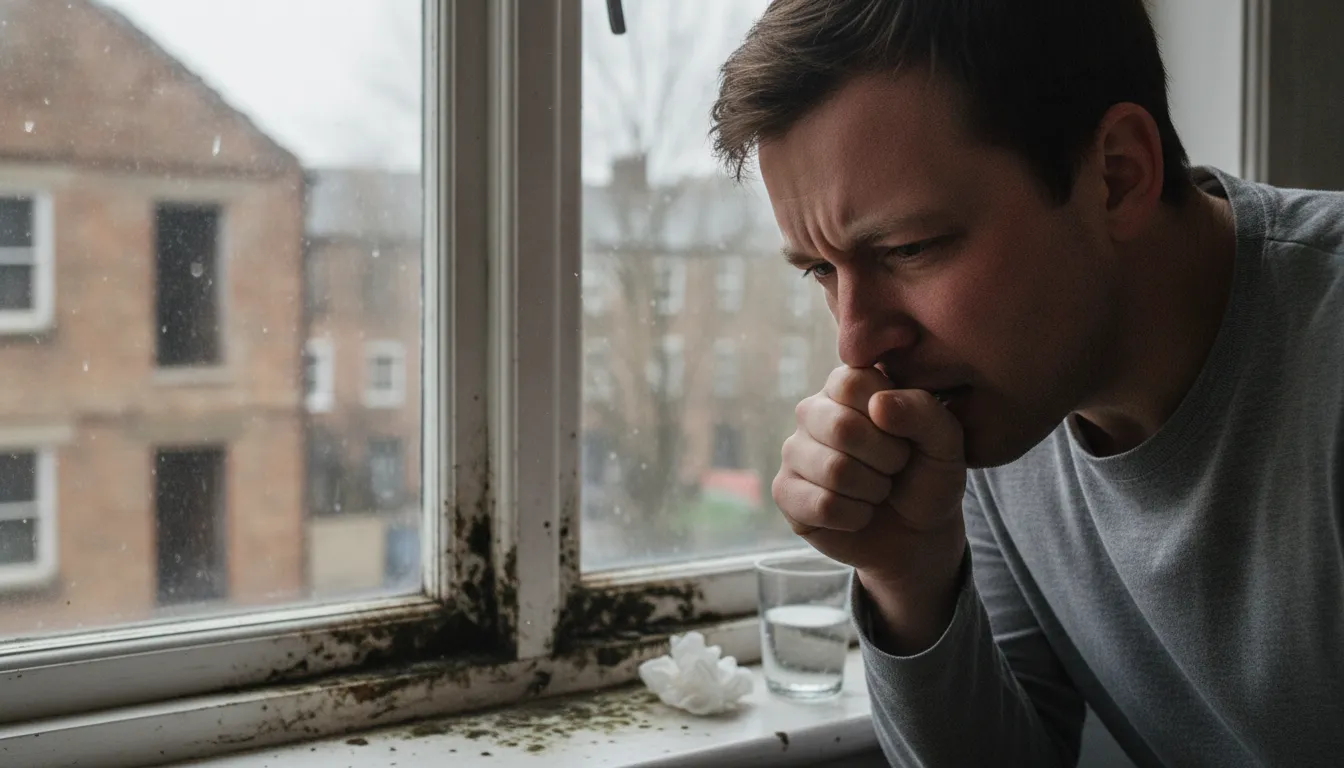
When you enter a building with water damage, you breathe in thousands of tiny mold spores. These spores are so small that they travel deep into your lungs and sinus cavities. For many people, this is when mold toxicity symptoms start to show up. It often feels like a cold that will not go away. You might think it is just the change in weather, but the cause could be hiding in your walls. Learning to spot mold toxicity symptoms early can save you from months of feeling unwell.
Mold Allergy vs Mold Toxicity
The body can react to mold in two main ways. A mold allergy is a quick immune response to the spores themselves. Your body sees the spore as a threat and releases chemicals like histamine to fight it. This leads to the itchy eyes and runny nose people feel during high pollen days. These signs usually stop as soon as you leave the moldy room. Mold toxicity is a much bigger issue. It is a slow response to mycotoxins, which are poisons made by some types of mold. This condition leads to long-term inflammation that does not stop when you walk outside. While an allergy is about your immune system overreacting, mold toxicity is about a toxic load that stays in your body.
Signs of Breathing Problems
Mold exposure often looks like the flu or a bad case of hay fever. You may have a nose that is always stuffed up or a drip in the back of your throat. This postnasal drip can make your throat feel sore and raw every morning. Some people develop a dry cough that gets worse when they lay down to sleep. If you have asthma, mold can make your breathing much harder. You might feel your chest get tight or hear more wheezing than you used to. The Mayo Clinic explains that mold can cause these common issues:
- Frequent sneezing and a runny nose
- Pressure in your face and sinus headaches
- Shortness of breath or trouble catching your breath
- Red or watery eyes that feel itchy
Why Medicines Do Not Work
Most people try to fix these issues with over-the-counter pills. Sprays and tablets might help for a few hours, but they only mask the signs. They do not get rid of the toxins that have built up in your system. If you take these drugs every day but never feel fully well, your body is likely dealing with a deeper toxic load. At Vaughan Vitality, we look for the root cause of your mold toxicity symptoms. We do not just look at your nose and throat; we look at how your whole body handles the load. Our approach helps you find where the mold is coming from. Then, we use special tests to see which toxins are in your blood. This path allows us to help your body clear the poisons and heal.
What Does Mold Toxicity Do to Your Skin and Joints?
Mold toxicity can trigger skin rashes, hives, and deep joint pain that moves around the body. These symptoms happen because mycotoxins cause systemic inflammation. Many patients are told they have fibromyalgia or rheumatoid arthritis when the real culprit is mold exposure. Treating the underlying mold toxicity often resolves these painful symptoms.
Mold toxicity can affect your body far beyond your lungs. For many, the first signs appear on the skin or through deep aches in the joints. These symptoms happen because mold releases mycotoxins. These toxins can trigger a high level of stress in your immune system. This leads to mold toxicity symptoms that look like other health problems. The immune response causes inflammation that spreads to your tissues. If you have been told your labs are normal but you still hurt, mold could be the hidden cause.
Mold Exposure and the Skin
Exposure to mold often leads to skin issues that do not go away with usual creams. You may notice red rashes, hives, or skin that feels very itchy. Some people develop dry, scaly patches that look like eczema. These signs show your body is trying to fight off the toxins it has taken in. Research from the Cleveland Clinic shows that these skin reactions are common responses to mold in your home. The skin is your largest organ and often shows what is happening inside. When you live in a water-damaged building, your skin may react to the spores in the air. If your skin is still red and itchy despite treatment, mold could be the root cause.
Joint Pain and Muscle Aches
Many patients feel deep pain in their joints and muscles that sleep does not fix. This pain often moves from one part of the body to another. It is not always from an injury or over-use. Instead, it comes from whole-body inflammation caused by mycotoxins. Many people are told they have fibromyalgia or rheumatoid arthritis when the real issue is mold. Finding the source of the mold is the best way to stop the cycle of pain.
Mold Toxicity as an Autoimmune Trigger
Mold toxicity can also act as a trigger for more serious health issues. For people with certain genes, mold exposure can lead to long-term immune problems. This is why we focus on autoimmune disease treatment that looks at environmental triggers. Mycotoxins can affect how your muscles work and recover. You might feel weak or have muscle twitches that you cannot explain. These signs often show that your body needs help to clear out the toxins and regain balance. Fixing the mold issue is a key step to help your joints feel better.
Why Is Mold Toxicity So Hard for Doctors to Diagnose?
Conventional medicine often misses mold toxicity because its symptoms overlap with dozens of other conditions and standard lab tests do not screen for mycotoxins. Patients are frequently told their labs are normal while suffering from debilitating symptoms. Functional medicine uses specialized testing like mycotoxin urine panels and VCS testing that standard medical practices do not offer.
Many people suffer for years before they find the true cause of their health issues. Often, these patients see many doctors but leave without clear answers. This is common with mold toxicity because the signs do not always fit into a neat box.
Symptoms That Look Like Other Issues
One big hurdle is that mold toxicity symptoms are not unique. They often look like other chronic health problems. For instance, the Mayo Clinic notes that mold contact can cause sneezing, coughing, and itchy skin. These same issues appear in common allergies or sinus issues. Because the symptoms overlap with so many health issues, doctors may miss toxins in your home. They might check your thyroid or look for autoimmune disease but miss the mold in your house. This overlap makes it hard to find the root cause without clear help.
The Problem With Standard Lab Tests
Another big challenge is the type of tests used in regular clinics. Most standard blood tests look for sudden illness or major organ failure. They do not track the low-level, long-term swelling caused by mold toxins. A conventional doctor may check your blood count, thyroid panel, and basic metabolic panel. These tests will likely come back within normal range even when mycotoxins are silently damaging your cells day after day. This mismatch between normal labs and severe symptoms creates confusion for both patients and doctors. Patients are often told their labs are normal even when they feel very ill. At Vaughan Vitality, we know that normal labs do not always mean you are healthy. We look deeper to find why your body is struggling to heal.
Specialized Knowledge and Better Testing
Most doctors do not get much training in how mold affects the body. They may not know how it hurts the immune system over time. When tests come back clean, some may tell you that the issues are all in your head. This can leave you feeling lost and alone. We use better tools to find what standard tests miss.
| Aspect | Conventional Medicine | Functional Medicine at Vaughan Vitality |
|---|---|---|
| Approach to symptoms | Treats each symptom separately with medication | Looks for a single root cause connecting all symptoms |
| Mold testing | Typically no mold-specific testing | Mycotoxin panels, VCS test ($50), QEEG brain mapping |
| Lab interpretation | Uses standard reference ranges | Looks at optimal ranges and hidden patterns |
| Treatment focus | Prescriptions for symptom relief | Detoxification, immune support, gut healing, brain training |
We offer a Visual Contrast Sensitivity (VCS) test for just $50. This quick screen helps us see if toxins are affecting your brain and nerves. We also use mycotoxin panels to detect specific mold toxins in your body. By using these tools, we stop the guesswork and help you thrive again.
How Functional Medicine Addresses Mold Toxicity at the Root Cause
Functional medicine looks past the surface of mold toxicity symptoms to find why your body stays sick. At Vaughan Vitality, we use a three-phase Vitality Roadmap: Review and Identify with advanced testing. Remove and Repair through guided detoxification, and Rebalance and Replenish to restore immune and gut health. Dr. Vaughan is trained in the Shoemaker protocol, the leading evidence-based treatment for CIRS.
Functional medicine looks past the surface of mold toxicity symptoms to find why your body stays sick. At Vaughan Vitality, we do not just treat the effect of mold. We work to fix the systems in your body that mold has damaged. Our clinic uses a deep, science-led path to help you recover. This starts with a clear plan called the Vaughan Vitality Roadmap. This plan helps us move from finding the problem to long-term health.
Three phases of the Vitality Roadmap
The first phase is Review and Identify. We use tools like mycotoxin urine panels to find which toxins are in your body. We also offer VCS testing to check how biotoxins affect your nerves. Key steps in this phase include:
- Review of your complete health history and past lab results
- Advanced mycotoxin urine panel to identify specific mold toxins
- VCS (Visual Contrast Sensitivity) test to screen for biotoxin illness
- Assessment of your home and work environment for mold sources
In the second phase, Remove and Repair, we help your body get rid of toxins. We support your liver and gut so they can bind and flush out mold waste. The final phase is Rebalance and Replenish. Here, we fix the immune system and gut health to keep you well.
Dr. Vaughan has deep training in the Shoemaker protocol. This is a 12-step path to treat Chronic Inflammatory Response Syndrome (CIRS). By following these steps, we make sure no part of your recovery is missed. We look at how mold affects your hormones and your brain to give you a full path back to health.
Unique brain support in Orange County
Our clinic is the only one in Orange County that mixes QEEG brain mapping with functional medicine for mold. Mold toxins often cause brain fog and mood shifts. We use brain mapping to see exactly where the brain is struggling. Then, we use neurofeedback to help your brain train itself back to healthier patterns. This unique combination helps patients recover cognitive function that standard mold treatment alone cannot address.
When to Seek Help for Mold-Related Symptoms
If you have symptoms in multiple body systems, a history of water damage exposure. And normal lab results from your primary care doctor, you may be dealing with mold toxicity. Early intervention can prevent progression to chronic inflammatory response syndrome. Vaughan Vitality offers specialized testing and treatment in Costa Mesa, with telemedicine available to California and Georgia residents.
Symptoms in many body systems
One clear sign that mold may be the cause is when you have issues across different parts of your body. If your brain feels foggy, your sinuses are blocked, your joints ache. And you are always tired all at the same time, it is important to look for a single root cause. Mold toxicity affects the whole body because mycotoxins travel through your bloodstream. When you see a cluster of these mold toxicity symptoms, it is time to seek specialized care.
Who is at risk in our area?
Orange County residents face unique risks from mold exposure due to the coastal climate. Homes near the beach in Newport Beach, Laguna Beach, and Huntington Beach often have high humidity that encourages mold growth. Older buildings in Costa Mesa and Santa Ana may have hidden water damage from aging pipes and roofs. If you live or work in a building with a history of leaks, flooding, or poor ventilation, you may be at higher risk for mold-related illness.
Expert care in Costa Mesa
At Vaughan Vitality in Costa Mesa, we help Orange County patients find the root cause of their chronic symptoms. Dr. Kristi Vaughan brings advanced training in functional medicine, neurofeedback, and environmental toxicity. Our team offers the only clinic in the region combining these tools under one roof. We also offer telemedicine for patients in California and Georgia, making expert care accessible no matter where you live. Schedule Your Free Health Assessment to take the first step toward recovery.
Frequently Asked Questions
How do you know if you have mold toxicity?
Mold toxicity is diagnosed through a combination of symptom assessment, environmental history, and specialized lab testing. Common signs include brain fog, chronic fatigue, sinus issues, joint pain, and skin rashes that do not respond to standard treatments. At Vaughan Vitality, we use mycotoxin urine panels and Visual Contrast Sensitivity (VCS) testing to confirm whether mold toxins are present in your body.
How long does it take to detox from mold?
The length of detox depends on the level of exposure, your genetics, and how long you were exposed. Most patients begin to notice improvement within several weeks of starting a guided detox protocol. Full recovery typically takes three to six months of consistent support, though some patients with chronic exposure may need longer. The Vaughan Vitality Roadmap provides structured phases to guide you through each stage of recovery.
Can mold toxicity cause weight gain?
Yes, mold toxicity can contribute to weight gain through several mechanisms. Mycotoxins can disrupt hormone function, particularly cortisol and thyroid hormones, which regulate metabolism. Chronic inflammation from mold exposure also makes it harder for the body to maintain a healthy weight. Some patients also experience cravings and blood sugar imbalances as a result of mold-related gut dysfunction.
Can mold cause autoimmune disease?
Mold exposure can trigger or worsen autoimmune conditions in genetically susceptible individuals. Mycotoxins can cause the immune system to become overactive and attack healthy tissues. This is particularly true for people with the HLA-DR gene variant, which impairs the body’s ability to clear mold toxins. Treating the underlying mold toxicity often helps reduce autoimmune flare-ups and may prevent disease progression.
How long does it take for mold to make you sick?
The timeline varies widely depending on the individual and the level of exposure. Some people develop symptoms within days of moving into a water-damaged building, while others may not notice issues for months or even years. Factors that influence the onset include your genetic susceptibility, the type of mold, the duration of exposure, and the overall health of your immune system. If you suspect mold exposure, early testing can help prevent long-term health complications.
Ready to Find the Root Cause of Your Mold Symptoms?
Living with unexplained health issues is exhausting. You deserve answers and a clear path to recovery. At Vaughan Vitality in Costa Mesa, we help Orange County patients identify and treat mold toxicity using advanced testing and evidence-based protocols. Dr. Kristi Vaughan and our team are here to guide you through every step of your healing journey.
Schedule Your Free Health Assessment Today and discover what is really causing your symptoms. Call us at (714) 434-9355 to learn more.